The Nose Is Recovered and Returned to Kovalyov
The NoseThe recovery of Platon Kovaloff’s nose briefly turns an absurd bodily loss into a police success: an official arrives at Kovaloff’s home with the missing nose, found and arrested as it was about to depart for Riga. Its return does not restore Kovaloff, however. The nose is intact but cannot be made to stick, leaving the decisive problem unresolved even after the authorities have identified and physically retrieved it.
Background: A Loss That Resists Ordinary Remedies
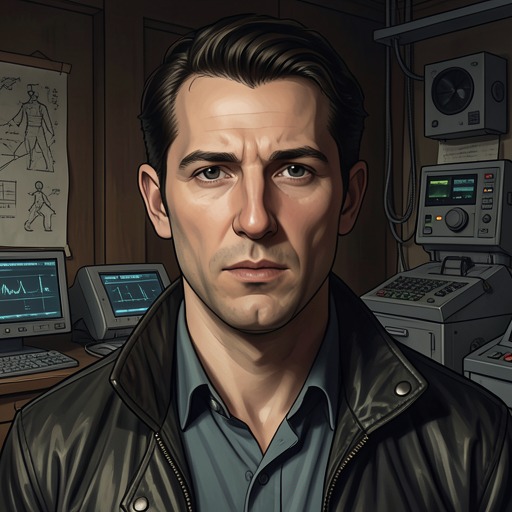
Kovaloff’s alarm is sharpened by the life he has built around rank and social recognition. Formerly a committee-man in the Caucasus, he insists on being called Major, takes a daily walk on the Neffsky Avenue, and hopes to secure a position appropriate to his standing. He is also willing to marry, but only a woman with a dowry of two hundred thousand roubles. Against these ambitions, the smooth vacancy where his nose should be is not merely an injury: it threatens his ability to appear before the people whose regard and connections matter to him.
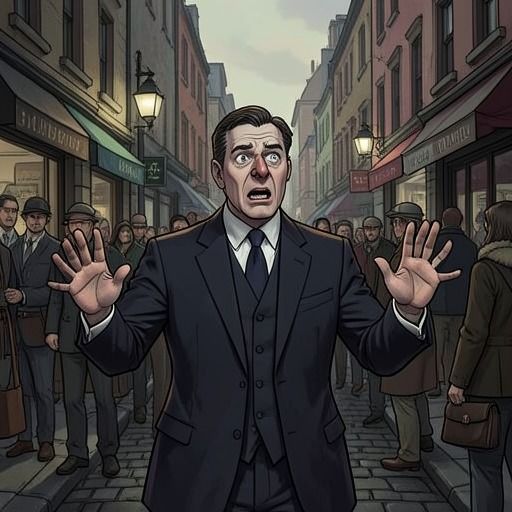
The nose’s independent appearance makes that threat grotesquely visible. Kovaloff sees it in a gold-embroidered uniform, with a stiff high collar, chamois-leather trousers, and a sword; its plumed hat marks it as a state-councillor. When he confronts it, the nose denies their relation and invokes the buttons on their uniforms to claim that they belong to different departments. Kovaloff’s own account to the advertising official preserves the same reversal: the missing organ now walks about the city as a state-councillor, while its owner cannot appear normally in society.
The Nose Is Found and Returned
After earlier attempts to seek help, Kovaloff is at home when a stranger asks whether Major Kovaloff lives there. The visitor is a police official, the same man who had stood at the end of the Isaac Bridge. He confirms Kovaloff’s loss, then announces that the nose has been found. Kovaloff is so astonished that joy temporarily leaves him unable to speak; when he can respond, he asks how the discovery happened and where the nose is.
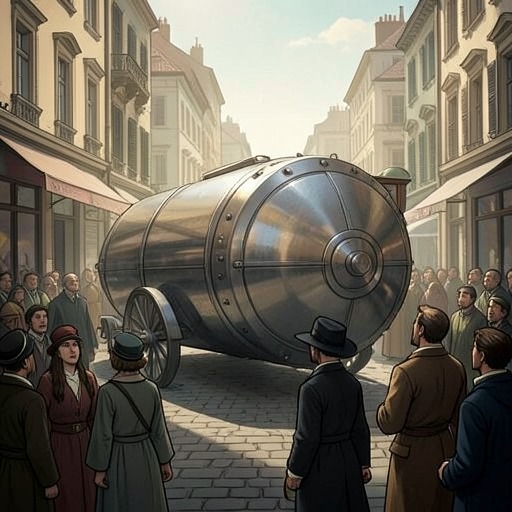
The official recounts that the nose was arrested just as it was getting into a carriage for Riga. It carried a passport made out some time earlier in the name of an official, and the police official initially took it for a gentleman. His glasses corrected the mistake: he recognized a nose instead. The episode compresses the story’s central absurdity into an official procedure of mistaken identity and recognition. The organ has a passport, a destination, and the appearance of a person of rank, yet is ultimately apprehended as Kovaloff’s missing body part.
The police official has brought the nose with him, knowing Kovaloff needs it. Wrapped in paper, it is produced from the official’s pocket, and Kovaloff recognizes it immediately. The visitor also supplies an account of responsibility: the principal culprit is a barber living on the Ascension Avenue, now safely locked up. He adds that Kovaloff’s nose is uninjured. The retrieval therefore resolves two immediate questions—where the nose is and whether it has been damaged—but does not yet answer whether Kovaloff can recover his former face.
Institutional Help and Its Limits
The recovery follows a sequence of failed attempts to make Kovaloff’s loss legible to institutions. He asks an advertising official to publish an appeal offering a reward to whoever brings him the missing nose, but the official refuses, fearing that such an advertisement might compromise the paper. His concern is not whether Kovaloff’s claim is true; he invokes the newspaper’s reputation and the risk of appearing to print nonsense. As precedent, he cites a seemingly ordinary advertisement for a lost black-haired poodle that was actually a satire about a cashier. Kovaloff insists that this is his own nose, almost himself, but the distinction does not change the refusal.
Kovaloff next goes to the police commissary, who receives him coldly and suggests that respectable people do not have their noses stolen. The remark strikes at Kovaloff’s sensitivity to rank and social position, and he leaves with dignity rather than continue the conversation. The contrast is pointed: the official later brings practical news of the nose’s arrest, but institutional attention has not been consistently guided by the urgency of Kovaloff’s need. One office worries about the credibility of an advertisement; another frames the loss as a reflection on the victim’s respectability.
Even the police official’s successful intervention does not settle what happens next. He declines Kovaloff’s offer of tea because he must go to the House of Correction, mentioning the high cost of living, his mother-in-law, and several children. His domestic obligations give the official errand an ordinary, practical setting, sharply unlike the extraordinary object he has just carried into Kovaloff’s home. The nose is returned as an item of police business, but its return does not itself repair the body.
Return Without Restoration
Kovaloff tries to put the nose back in place, but it behaves like wood and falls onto the table with a strange, cork-like sound. Repeated attempts fail. He calls Ivan and sends him to fetch the doctor who occupies the finest flat in the mansion, hoping that medical skill can complete what the police have accomplished by retrieval.
The doctor examines the vacant place by turning Kovaloff’s face from side to side and flicking the spot where the nose had been. His conclusion is categorical: replacement cannot be done, and attempting it would make matters worse. He advises Kovaloff to remain as he is and let Nature take its course. Kovaloff protests that he cannot appear in good society without a nose, especially since he is invited to two parties that evening and knows women whose company matters to him. He even offers to keep a loosely attached replacement in place with his hand, but the doctor refuses to attempt the procedure.
The event’s ending thus separates recovery from restoration. The authorities locate the nose, arrest it, and return it undamaged; none of those achievements can overcome the failure of reattachment. The state-councillor who once asserted an independent identity is back in Kovaloff’s possession, yet possession does not mean bodily or social wholeness. The reversal is comic in its administrative precision and unresolved in its consequence: the lost part has been recovered, but the man remains without it on his face.